Thursday, September 9, 2010

Alternative Brush management
175 BRUSH GOATS TO ELIMINATE OVERGROWTH IN BACK-9 BARANCAS


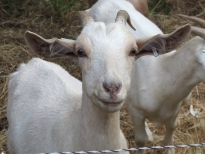
Over the years there have been various approaches to control the weeds and overgrowth in the canyons and barancas. None of the approaches will be as efficient and “green” as the goats that will be brought on to our property later this month. As we look to restore the look more common during the MacKenzie era, one of the features that has been lost is the stunning, rugged definition of the canyons. Throughout the years, the steep, jagged edges have all been covered up by extensive overgrowth. During the week of September 20th, we will introduce goats into the canyons to begin the extensive cleanup. There is a long list of benefits with regard to using goats instead of manual labor. Some of these include:

  • Significantly cheaper than using our manual labor to clear out the barancas 
  • Reduce the need for spraying harmful chemicals 
  • No heavy equipment damage or noise 
  • Goats can easily traverse steep, rocky and difficult terrain
  • It will add an entertainment factor for our members and guests 
  • Goats break down plant material, whereas our crew would still have to drag it out and chip it 
  • They are very quiet cleaners and you will see amazing progress each week


The goats will be enclosed in areas that will be surrounded by solar powered electric fences. Great Pyrenees dogs will be with the goats to protect them and will only bark if they feel the goats are threatened. A herdsman will be within contact or onsite 24/7 and the goats are expected to be here for about 7-weeks. This is a tremendous undertaking, but the restoration to the canyons along with the elimination of unnecessary overgrowth, will ensure that this club project will be talked about for many years to come.

Monday, July 19, 2010

Summer Disease Update

Depending on the weather conditions, this can be a tough time of year for disease pressure in our region. A couple of the diseases we are currently seeing on the course are Southern blight and anthracnose.


We've seen Southern blight come in on some of the green surrounds over the past few weeks. We are not currently concerned about the presence of this disease due to its location (in the roughs). We are managing the situation by close monitoring of the progression of the disease, continued overseeding of the affected areas with resistant turf species, and proper irrigation management.


We've also been seeing some anthracnose pressure on a few of the greens (most notably the back right of the first green). Our management of this disease includes fungicide applications every ten to fourteen days, very close monitoring of the progression, as well as cultural practices such as sand top dressing, maintaining a mowing height above .115", and proper irrigation management.

Thursday, July 8, 2010

NCGA Area of Emphasis: Agronomic Principals and Practices


Cultural Practices – At Pasatiempo we feel that plant and soil health are the keys to growing great turfgrass, and that proper plant and soil health is achieved primarily through good cultural practices. We aerify greens with 5/8” hollow tines twice a year, and use a Planet Air or bayonet tines every six to eight weeks to relieve soil tension in between spring and fall aerification. Like the greens, we use hollow tines to aerify fairways and tees each spring and fall, and knife tines throughout the rest of the season to break up surface tension and increase water percolation.
Top dressing is done on a light and frequent basis (every two weeks accompanied by a verti-cut) throughout the year on the greens, and we apply sand to the fairways five to six times per year.


Proper fertilization and water management are two of the main contributing factors to our cultural program. We use a “spoon feeding” method of fertilization on greens, tees and fairways, with spray applications scheduled every 10 days on the greens and every 21 days on the fairways and tees. We also conduct several granular organic fertilizer, and soil amendment applications on the fairways and roughs to help build up the biological profile of our soils.


Our views on water management have been discussed at length in previous blog posts, but with our new irrigation system in place we now have the ability to be much more efficient with how we water the golf course. We are now able to put the water where it is needed rather than having to overwater certain areas in order to keep other areas alive. This will have a direct affect on the rest of our cultural program, and will allow us to maintain a firm and fast playing surface while keeping the turf healthy at the same time.

Chemical Use – Pasatiempo has been Audubon Certified for over a decade, and therefore we have a major focus on our environmental impact. This is a constant consideration when we evaluate our chemical use. All of our disease management is done on a “spot and treat” basis, and our thresholds are relatively high considering our level of maintenance. Due to our climate we don’t have the intense disease and insect pressure that other areas of the country face; however, we do see fusarium patch in the cool months, and yellow patch, waitea patch, and anthracnose in the warmer season.

Tuesday, June 22, 2010

Behind the Scenes at the 2010 U.S. Open


Although most avid golf fans have the four days of the U.S. Open marked on our calendars from the beginning of the PGA Tour season, few of us have had an opportunity to experience our national championship from behind the scenes. This past week at Pebble Beach I had a chance to spend some time volunteering on the maintenance staff, and got a chance to see the operation from a totally different perspective. Participating in an event of this magnitude was not only a great experience for a young turf manager, but has been a career goal of mine for many years.


Contrary to what players and television commentators may have said, the golf course was in perfect shape for a U.S. Open. The U.S.G.A. and Pebble Beach superintendent; Chris Dalhamer felt that the golf course was exactly where it needed to be to present the toughest test of golf to the best players in the world. Greens were extremely firm and fast, and several areas of the course had been manipulated (i.e. shaving bunker edges and coastlines down to fairway height, and shifting fairways to change the players line of play into holes) to bring the various design features more into play.


Probably the most impressive thing to witness was the management of the irrigation. The golf course hadn’t been watered with the irrigation system for over two weeks, and the only water that was put on the golf course was done by hand watering. This is not only the most efficient way to apply water to turfgrass, but also provides the ultimate control of where the water is applied. This technique gives the superintendent the ability to provide the firmest playing conditions possible while still keeping the grass alive. (Please note that NBC did use green filters on their cameras, and the golf course was much browner and wilted than it appeared on television.)


The U.S.G.A. mandated that the fairways be mowed all one direction from tee to green to make the fairways seem even faster. While this is probably the most inefficient way to mow fairways, it accomplished exactly what the U.S.G.A. wanted, and made the shaved bunkers and coastlines even more of a factor.


While the greens were fast (pushing 14’ on the Stimp meter) the amazing thing was how fast and firm the approaches were (Stimping at over 12’). This allowed for shots to be landed short of the greens and run up more like a links style golf course. Players were also putting the ball from several yards off of the green due to the extremely tight lies on the approaches.


An event of this caliber is not easily achieved and should not be expected for daily play. For this event there were a total of over 100 volunteers from around the world, consisting of superintendents and assistant superintendents, which brought the number of total staff for the week to nearly 140 professional turf managers. Especially for this event Pebble Beach had 12 interns with college degrees on staff. We were working split shifts with the first shift beginning at 4 a.m. and the second shift not ending until 10 p.m. All told this event has been planned over the past six years and culminated over the four days that we all saw on television.


This was an amazing experience that I will never forget. I feel that I have learned many things about what it takes to provide true tournament conditions. I now have a better understanding of the vast amount of detail and focus it takes to produce an event of this stature, and it makes me want to strive to provide event better conditions for our members and guests on a daily basis.

Friday, May 7, 2010

NCGA Area of Emphasis: Irrigation and Water Use Efficiencies


As we all know by now; we are currently installing a new irrigation system at Pasatiempo as part of our move toward environmental stewardship and improved course conditioning. The old system was extremely inefficient and unreliable, and with the increasing focus on water use and efficiency in Northern/Central California, we didn’t have many other options than to upgrade. The irrigation installation company (Leibold Irrigation) has completed all but two holes of the golf course, installing all new mainline, lateral lines, wiring, heads, and satellites. As we move forward we will be spending the remainder of the irrigation season working with representatives from Toro’s irrigation division to adjust sprinkler arc and angle, nozzles, and run times to create the most efficient and affective irrigation system possible.

We will also be using the latest technologies in irrigation to manage our irrigation system as well as our turfgrass. These technologies and innovations include individual head control, iPhone/iPad applications, new Toro VP satellites, and sub-surface drip irrigation around our bunkers. Although the new system and innovative technologies will be a great improvement it will, by no means, eliminate the need for “old fashioned” techniques such as hand watering and daily course monitoring. As most of our readers also know we have eliminated almost 30 acres of what was once irrigated turfgrass throughout the golf course and replaced it with native grasses that will be completely un-irrigated, which will be a major factor in reducing our overall water use.

Currently our water supply is from the city of Santa Cruz, and consists of extremely valuable and expensive potable water. Our system is under constant pressure from city mainlines that enter the golf course in three different locations. Our plan for the next two years is to install a pump and mixing station to accommodate the use of recycled water from the city of Scotts Valley. Although this will be less expensive and provide a good use for water that otherwise would be piped into the Pacific Ocean, we will be faced with new challenges including increased salt levels in the soil that accompany the use of recycled water which can lead to many different issues in turfgrass management.


Due to my extensive irrigation background, along with the training I have received since coming to Pasatiempo (hands on experience with the installation of the new system, Toro Site-Pro training, etc…), I feel confident that I will be able to assist in the implementation of our new irrigation plan, and I look forward to the challenges that lie ahead.

Wednesday, May 5, 2010

Pasatiempo Golf Club to host Northern California GCSA Field Day


Members of the Northern California Chapter of the GCSAA will gather on Thursday, May 6 at the world-renowned Pasatiempo Golf Club for its 2010 Superintendents Field Day. This educational experience entitled Water Conservation: Pasatiempo's Viable Response to Water Rationing will provide an in-depth look at an Alister MacKenzie-designed golf course that has been environmentally elevated through its irrigation efficiency model and historically enhanced through a masterful restoration that spans nearly two decades of dedicated work.
According to Host Superintendent Paul Chojnacky, the course retains its premiere status while managing water resources through an impressive reduction of maintained turf and improved technology. Twenty-five acres originally maintained as turf, are now designated for drought-resistant native grasses. "While Pasatiempo has always been considered one of the most revered courses in America, today it also serves as a model for managing water resources," stated Chojnacky. "We've been able to improve our environmental standards through well-planned conservation measures, while still providing an exceptional on-course experience, as originally intended back in the 1930's by course architect Dr. Alister MacKenzie and club founder Marion Hollins."
Efficiently managing water is crucial, not just to Pasatiempo GC but to most golf course operators and superintendents throughout California. According to GCSANC event Co-chairman Rodney Muller, the field day will span a variety of topics including the site's rich history, an overview of course restoration and renovation efforts, a close study of water management and efficiency measures, culminated by an on-course tour guided by industry experts. Immediately following lunch, field day participants will have an opportunity to tee it up on this spectacular semi-private course.
"This field day is timely as our association members seek workable solutions for water reduction," said Muller. "Pasatiempo serves as a fine example through its use of strategically-planted native grasses coupled with its improved water-monitoring technology. Attendees will also view some of the finest restoration work ever conducted on a MacKenzie-designed course."
Event speakers include Host superintendent Paul Chojnacky, Jim Urbina (Renaissance Golf Design), Ryan Wilson (Toro Irrigation Products), Michael Bova (Davey Tree), and Todd Eckenrode (Origins Golf Design). Sponsored by Toro and Turf Star, Inc., and co-chaired by Ali Harivandi, Ph.D. and GCSANC director Rodney Muller, this educational experience is a collaborative effort between the Northern California Chapter of the GCSAA and the University of California Cooperative Extension.
The event has the support of the following committee members: Steve Agin, Brian Bagley, Thomas Bastis, CGCS, Gary Carls, CGCS, Jon Christenson, Craig Faris, Gary Ingram, CGCS, Pearce Kaner, Gary Otto, Mike Souza, Dave Wilber, Matthew Wisely, and Craig Zellers.
For more information about Pasatiempo GC visit http://www.pasatiempo.com. For more on Toro visit: http://www.toro.com/ and for the facts on Turf Star visit: http://www.turfstar.com/.
The Northern California Chapter of the GCSAA (GCSANC) is dedicated to serving its members, advancing their profession and enhancing the enjoyment, growth and vitality of the game of golf. This is evidenced through its support of the Environmental Institute for Golf, Audubon Cooperative Sanctuary Program, California Alliance for Golf, The First Tee, and Doctor's Orders: Play Golf. For more on the GCSANC visit: http://www.gcsanc.com.
Sunday, May 2, 2010

NCGA Area of Emphasis: Special Event/Tournament Preparation


We recently hosted the Western Intercollegiate Golf Tournament at Pasatiempo. This is one of a handful of premier collegiate events in the United States, and definitely one of the top events on the West Coast. This tournament has a storied history with Phil Mickleson and Tiger Woods being just two of the names on the long list of well-know PGA Tour players who have competed in this event over the four decades that it has been held at Pasatiempo.

Last year the conditions were extremely difficult with the winning score being several over par (which was mostly due to the green speeds being upwards of 12 feet on the Stimp Meter). This year the goal was to keep the presentation of the golf course difficult yet extremely fair for all of the teams. Due to the extreme undulations of the Alister MacKenzie designed greens, we knew that the key to maintaining the integrity of the event was going to be by controlling the speed of the greens.

This year our plan was to keep the green speeds at around 10 to 11 feet on the Stimp Meter so that the scores would be more representative of the talent of the players rather than let the golf course run them off the property again. We accomplished this by not lowering the cutting height past what is normal for daily play (.115), and only single rolling during the days of the event. We did come in and mow the greens in the evening prior to the start of the event due to excessive growth rate that was a result of the late-season rains that we have been having in the Santa Cruz area this Spring. The greens were double verti-cut and top-dressed one week prior to the start of the final round, and mowed and rolled for four days leading up to the start of the event.

Because our goal at Pasatiempo is to provide tournament conditions on a daily basis there wasn't really many things that we did differently from our daily maintenance routine other than some minor detail work that we focused more on during the week leading up to the tournament. We had started burning in our fairway mow pattern several weeks before the event (a dark/light block pattern that can be seen in the picture featured at the top this blog), and other than that there were just minor adjustments that were needed on the maintenance end of the operation to prepare for this event.

The set up for the tournament was set two weeks before the first round by myself and our head golf professional; Ken Woods. We set four hole locations based on historical tournament data and used white paint to mark the locations. On the days of the event we had two of our staff cutting cups and myself supervising the set-up and using hole-in-white to paint the cups. The only thing out of the ordinary was that we had to cut two locations in each green on Saturday. Because the players were playing 36 holes on Saturday and were started in a "shotgun" format, there wasn't any time in between rounds to cut the new locations, so the players were instructed to move the flag stick to the new location after the completion of their first 18 holes.


In the end we had a very successful tournament with coaches, players and tournament officials very happy with the golf course. The winning team was the 4th ranked Oregon Ducks with a team total of 12 under par, and the 6th ranked UCLA Bruins coming in second with a total of 6 under par.

My blog has moved!

You should be automatically redirected in 6 seconds. If not, visit
http://pasatiempomaintenance.com
and update your bookmarks.